Proxy Interviews and Deepfake Candidates: How to Protect Your IT Hiring
September 21, 2026
Cloud Engineer vs DevOps vs SRE: How to Define and Hire Each Role
September 28, 2026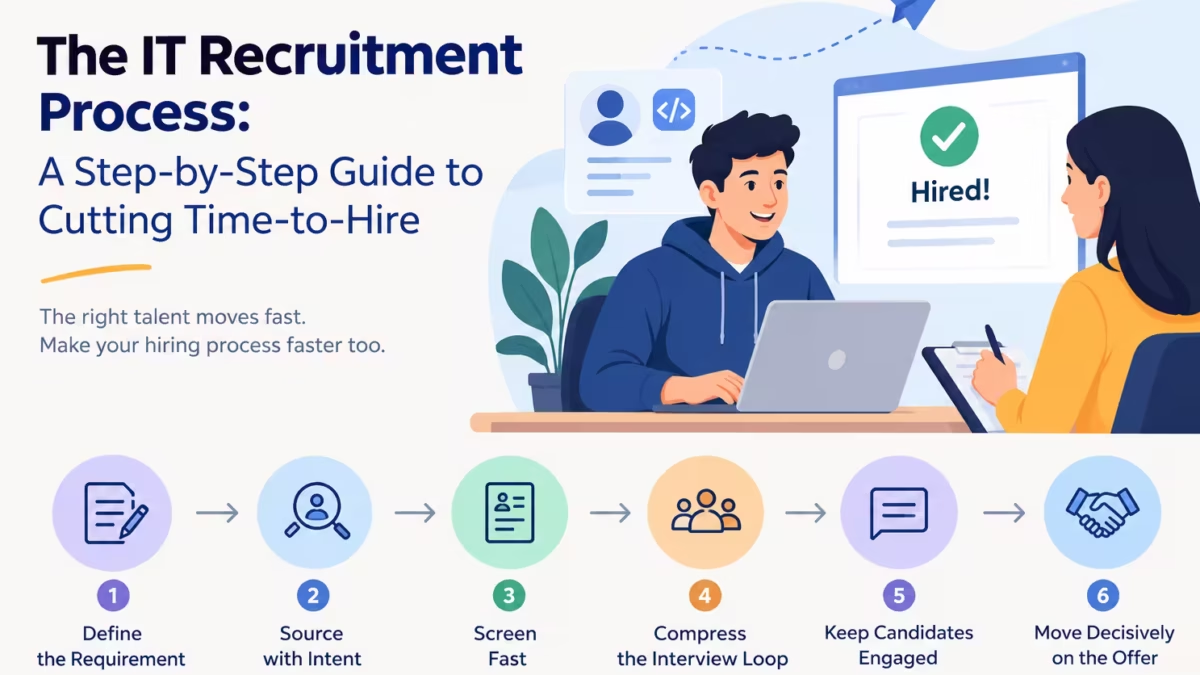
Good engineers do not sit on the market for long. That is the whole problem in one sentence. By the time a slow IT recruitment process finishes its fourth round of interviews, the candidate everyone loves has already been accepted somewhere else. Speed is not a nice to have in tech hiring anymore. It is often the difference between landing the person and losing them.
But here's the trap. Chase speed alone and you end up with bad hires, which cost far more than a slow process ever did. The real goal is a tight, deliberate recruitment process that moves fast because it's well built, not because it's skipping steps. This guide walks through that process stage by stage, with a clear eye on where the days actually get lost.
Why time-to-hire matters more in IT than almost anywhere else
Time to hire is the stretch between a candidate entering your pipeline and accepting an offer. In most functions, a few extra days here and there won't sink you. In IT, they can.
Technical talent gets multiple offers. Counteroffers fly. A developer actively looking will often close a decision in a couple of weeks. Drag your process past that window and you're not competing on salary or culture anymore, you're just late. A bloated IT hiring process also burns your own team's time, clogs the pipeline, and quietly signals to candidates that the company is indecisive. None of that helps.
So the fix isn't rushing. It's removing the friction that adds days without adding value.
Step 1: Nail the requirement before you post anything
Most delays are born right here, at the very start, before a single CV comes in. A vague job description guarantees a messy pipeline later.
Sit with the hiring manager and get specific. What will this person actually build? Which parts of the stack are non-negotiable versus nice to have? Is this a role that needs ten years of depth, or three years and strong fundamentals? Separate the must haves from the wish list, because a job description that demands everything attracts either nobody or the wrong everybody.
Agree on the interview stages and the scorecard now, upfront. Deciding how many rounds there will be after candidates are already waiting is how weeks disappear.
Step 2: Source with intent, not just volume
More applicants isn't the win people think it is. A flood of unqualified resumes just means more screening, more delay. Targeted sourcing beats a wide net almost every time.
Go where the relevant talent actually is. Niche communities, GitHub, referrals from your own engineers, curated talent pools built over time. Referrals in particular tend to move faster and convert better, because there is already a layer of trust and pre screening baked in.
This is also the point where an experienced IT recruitment agency earns its keep. A good one already holds warm relationships with candidates who are not scrolling job boards, which compresses the sourcing stage from weeks into days.
Step 3: Screen fast, and screen for the right things
Screening is where time to hire either stays lean or balloons. The aim is to filter accurately without turning it into a bottleneck.
Start with a short, structured recruiter call. Confirm the basics: real experience, notice period, expectations, genuine interest in the role. Then move quickly to a role relevant to the technical screen. Keep it focused. A tight live discussion where the candidate explains their own work usually tells you more than a sprawling take home that sits in their inbox for a week.
Standardise it. Same core questions, same scorecard, every candidate. Consistency speeds up decisions because you are comparing like with like, not one recruiter's gut against another's.
Step 4: Compress the interview loop
This is the single biggest time sink in most IT hiring processes and the easiest to fix once you look at it honestly.
Batch interviews wherever you can. Instead of stringing four rounds across three weeks, cluster them into one or two days. Panel formats help. So does deciding in advance exactly who talks to the candidate and what each interviewer is responsible for assessing, so nobody's covering the same ground twice.
Set a rule that feedback goes in within twenty four hours of each round. The delay between interviews is rarely the interview itself, it's the wait for busy people to fill in a form. Close that gap and you'll often shave the most days off your entire process without changing a single interview question.
Step 5: Keep the candidate warm the whole way through
A candidate who feels ignored starts looking elsewhere, even mid process. Communication is not a courtesy here, it's a speed tactic.
Tell them what the next step is and roughly when. Reply to their messages. Give a heads up if something slips. Silence is what pushes strong candidates toward the company that is actively courting them. A little transparency keeps them engaged right through to the offer, which protects all the speed you worked to build in the earlier stages.
Step 6: Move decisively on the offer
You've moved fast for five steps. Don't stall at the finish line. This is where hesitation costs you the hire outright.
Have the offer parameters, salary band and approvals sorted before the final round wraps, not after. When the decision lands, extend the offer the same day if you can. Then stay close during the notice and joining period. A candidate who goes quiet post offers is often being counter offered and a quick, warm check in can be the thing that keeps them committed.
Where a specialist partner fits in
Building all of this in-house takes time and a mature recruiting function. Not every company has that and that's fine. A specialist IT recruitment agency brings a pre-built pipeline, technical screening capability and process discipline that would otherwise take you quarters to develop internally.
The value is not just handing off the work. It's the compression: warm candidates, faster screening, fewer wasted rounds and a smoother path from requirement to joining. Done well, it takes real days out of your time to hire while keeping the quality bar exactly where it should be.
How Prism HRC helps you hire faster without cutting corners
At Prism HRC, we help clients tighten every stage of the IT recruitment process, from sharp requirement definition and targeted sourcing to structured technical screening and offer stage follow through. Our technology recruitment teams assess real capability rather than CV keywords, and coordinate interviews to keep the loop tight.
For permanent, contract, project and contract to hire needs, Prism HRC helps clients cut time to hire while protecting hiring quality, so the person you want doesn't slip away to a faster competitor.
Prism HRC tightens every stage of your IT hiring, from sharp requirements to targeted sourcing and structured technical screening, so the person you want does not slip away to a faster competitor.
Hire faster with Prism HRC
Frequently Asked Questions (FAQs)
Tell Us Your Requirement
Ready To Build Your Dream Team With Prism HRC?
Want to explore our range of recruitment, staffing, payroll, compliance, employee welfare and employee global mobility solutions? Fill out this form and our subject matter experts will get in touch with you within 2 working days to address all your requirements at length.
Note to Candidates: Please DO NOT use this form to career related queries or job applications, as all such requests will be DELETED. For any job/career related queries, please go to career page.